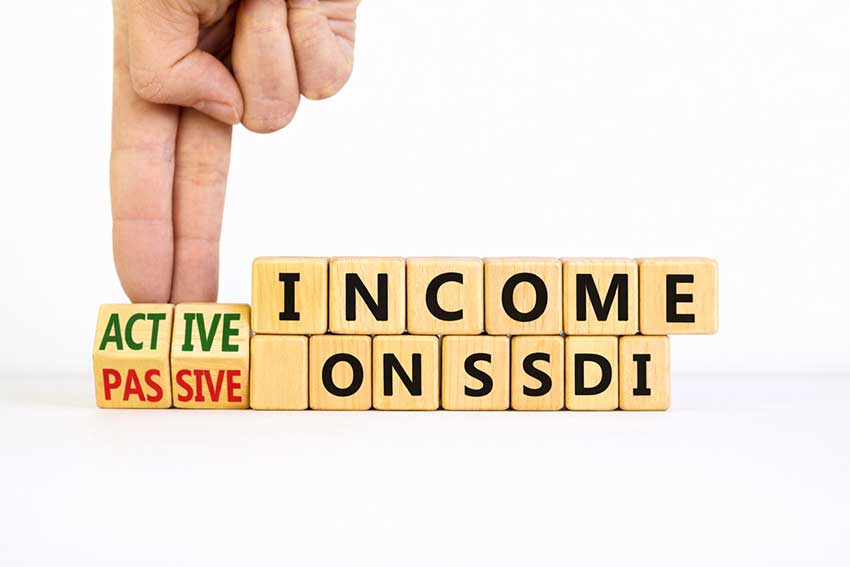
“People keep telling me passive income doesn’t count… but SSA told me it does.”
If you’ve ever asked something like:
“What if I write a book, list it on Amazon, and just collect royalties?”
“What if I sell digital downloads?”
“What if I make money while I sleep – that’s passive, right?”
You’ve probably heard this response online:
“No, that doesn’t count as work.”
Here’s the problem:
That answer is often wrong – or at least dangerously incomplete.
Because “passive income” is not an SSA category.
It’s an internet term.
SSA uses a completely different framework.
Let’s translate this into real life situations.
First, a reality check: SSA doesn’t care what feels passive
People call income “passive” when:
-
it doesn’t require clocking in
-
it doesn’t feel physically demanding
-
it continues after the initial work
SSA doesn’t evaluate income based on vibes.
They look at:
-
Was work activity involved?
-
Is the income ongoing?
-
Does it reflect the ability to engage in substantial work?
-
How is the income classified for SSA purposes?
Analogy:
Calling something “passive” to SSA is like calling a sandwich “healthy” to your doctor.
They’re still going to look at the ingredients.
Why people get bad advice about passive income on SSDI
Most bad advice comes from people mixing up tax language with SSA language.
On taxes:
-
royalties
-
digital products
-
self-employment income
…may be treated one way.
On SSDI:
-
SSA is not asking how the IRS sees it
-
SSA is asking what this says about work capacity
SSA uses their rules, not internet rules or tax rules.
SSDI: how “passive” income is actually evaluated
For SSDI, the central question is always:
“Does this income reflect the ability to engage in substantial gainful activity?”
Here’s how common “passive” income ideas are usually viewed:
1. Writing a book & earning Amazon KDP royalties
This is one of the most misunderstood examples.
People say:
“You write it once, then it’s passive.”
SSA sees:
-
ongoing income tied to intellectual labor
-
possible ongoing promotion, updates, marketing
-
evidence of sustained work activity
Key point:
Royalties can be considered self-employment income and can count toward SGA, depending on circumstances.
It is not automatically excluded just because it’s royalties.
2. Selling on Etsy (physical or digital)
SSA often treats this as:
-
self-employment
-
ongoing business activity
-
ongoing effort (even if small)
Even digital downloads:
-
still involve product creation
-
listing management
-
customer interaction
-
payment processing
SSA looks at the existence of a business, not whether you ship boxes yourself.
3. Gig work (DoorDash, Spark, Uber Eats, Uber, Lyft)
This is not passive income under SSA rules.
This is:
-
earned income
-
active work
-
very clearly tracked
-
often reported to SSA via earnings records
This income absolutely counts toward SSDI thresholds.
4. Selling items around your house
This one is more nuanced.
-
Occasional personal item sales are often treated as conversion of personal property
-
Repeated or organized selling can look like business activity
Analogy:
Selling your couch once ≠ running a resale business.
Patterns matter.
SSI: why passive income matters even more
SSI is needs-based, so income classification matters deeply.
-
Earned income reduces SSI differently than unearned income
-
Some income exclusions apply
-
Some “passive” income still counts
Even income that feels small or irregular can affect SSI payments month-to-month.
So for SSI:
-
“Passive” doesn’t mean “safe”
-
Timing and classification are critical
SNAP: where people get blindsided
SNAP rules are different again – but the same mistake happens.
People assume:
“It’s passive, so it won’t affect food benefits.”
SNAP looks at:
-
household income
-
earned vs unearned income
-
reporting requirements
Gig income, royalties, Etsy income – all of them can affect SNAP.
The problem isn’t earning.
It’s earning without understanding how it’s counted.
The most important rule across all programs
Here it is, plain and simple:
SSA and SNAP care about patterns, not stories.
Analogy:
They don’t read your explanation – they read the spreadsheet. They see the numbers.
That’s why:
-
steady, boring income is safer than spikes
-
clear reporting beats clever categorization
-
“passive” labels don’t protect you
So… is passive income “allowed” on SSDI?
Wrong question.
The better questions are:
-
Does this involve ongoing work activity?
-
Is the income recurring?
-
How is it classified?
-
How does it interact with SSDI thresholds or SSI needs rules?
Those answers determine outcomes – not the word “passive.”
What to read next
From here, the most helpful follow-ups are:
-
Does this count as Substantial Gainful Activity (SGA)?
-
How SSA treats self-employment income
-
Reporting income correctly (and avoiding delayed problems)
Each of those breaks this topic down further.
Important disclaimer (please read)
This article explains general rules for SSDI, SSI, and SNAP as of 2026.
Your situation may differ if you have:
-
multiple benefits
-
self-employment
-
irregular income
-
a prior work attempt
-
changes in household or living situation
Before making decisions based on this information, talk with a benefits counselor.
Free benefits counseling is available
SSDI and SSI recipients can access benefits counseling through SSA’s
Work Incentives Planning and Assistance (WIPA) program.
📞 Ticket to Work Help Line: 1-866-968-7842
📞 TTY: 1-866-833-2967
Monday–Friday, 8 a.m.–8 p.m. ET
They can help you understand:
-
how specific income would be treated
-
how work incentives apply to your case
-
how to avoid preventable problems later