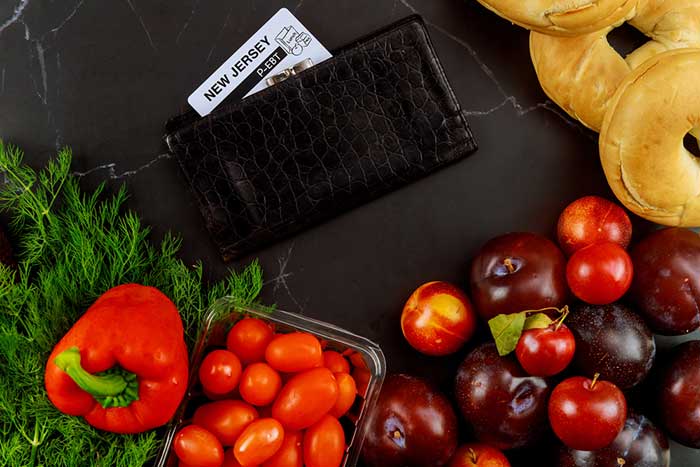
What happens if your SNAP benefits disappear tomorrow – or shrink again – and there’s nothing to fall back on?
Not in theory. In real life.
The grocery math.
The checking-your-balance math.
The quiet panic when prices go up but benefits don’t.
The mini panic attack when you go to get the mail and see a letter there from DJFS.
The way one letter, one form, one income change can knock the whole thing sideways.
Or – maybe you still have SNAP, but you’re tired.
Tired of how tight it is.
Tired of how the stigma people attach to it (and you).
Tired of knowing that one small shift could turn into a huge problem.
If that’s you, you’re in the right place.
A lot of people recently lost benefits suddenly due to rule changes, paperwork issues, income changes, etc. Rule shifts are often sudden and arbitrary – totally out of your control.
Other people still receive SNAP, but feel boxed in by it, stuck managing scarcity instead of building anything sturdier.
Most people feel like it’s a double-edged sword: One on hand, they’re grateful for the help but at the same time, feel uneasy about how fragile everything feels.
The real question isn’t whether SNAP is “good” or “bad.”
The real question is this:
How do you make your life less fragile when money is tight, energy is limited, and you don’t have room for big risks?
That’s what this article is about.
SNAP Helps – But It Doesn’t Create Security
SNAP keeps people fed. That matters. Full stop. It’s a big deal.
Not knowing where to get the money to buy food when you have 3 kids at home or when you only have enough money to buy food for half the money makes you sweat and unable to sleep at night.
I get it.
I’ve been there.
But SNAP doesn’t create stability.
Most people living on SNAP already know the limits:
-
The benefits often don’t last the full month
-
Rules change in an instant
-
Reporting requirements add so much stress
-
Small income changes can cause outsized cuts
-
There’s no long-term protection built in
- You read the comments online of people shaming those on benefits and you can’t help but feeling “less than”
- You hear the sign and see the smirks of the people behind you in the grocery checkout line when you go to pay with your EBT card
The reality is that depending on one source – benefits, one job, one person – leaves you exposed.
Not because you did something wrong, but because life is unpredictable.
That’s why so many people quietly want something else alongside of – or even instead of – SNAP.
Not an ideology.
Not a statement.
Just… options.
Wanting More Control Isn’t a Rejection of Help
This is worth saying plainly.
You can accept help and still want to rely on yourself more.
You can be thankful for SNAP and still want income that doesn’t vanish overnight.
You can want to earn your own money without judging anyone else’s situation.
Those things don’t cancel each other out.
Most people searching for ways to make money while on SNAP aren’t trying to prove anything.
They’re trying to reduce how vulnerable their lives feel.
That’s a rational response to living close to the edge.
Why “Just Get a Job” Misses the Point
A lot of advice aimed at people on SNAP assumes a life many people don’t have.
It assumes:
-
consistent health
-
reliable transportation
-
predictable schedules
-
affordable childcare
-
energy at the end of the day
-
flexible employers
-
enough local job options that actually pay enough
Many people don’t have that combination.
Some are juggling chronic pain, disability, caregiving, burnout, unstable housing, or mental health challenges.
Some live where jobs are scarce or hours are unpredictable.
Some simply don’t have the margin to gamble on something that might fall apart in a month.
That doesn’t mean earning money is unrealistic.
It means the strategy has to respect reality instead of ignoring it.
A Safer Goal: Income You Control (Even in Small Amounts)
Instead of aiming for:
-
replacing SNAP overnight
-
“financial freedom”
-
building a business
A more realistic, workable goal is this:
Create small, self-directed income that fits alongside your current situation.
Income that:
-
doesn’t require startup cash
-
doesn’t depend on social media or an audience
-
doesn’t assume perfect health
-
can be adjusted when life interferes
Even $300 – $500 a month can matter more than it sounds.
That can mean:
-
fewer food gaps
-
less panic when something breaks
-
more breathing room
-
less fear around benefit changes
-
a quiet sense of control returning
That kind of income isn’t flashy, but it’s real.
A Free Exercise You Can Do Today (No Money Required)
Here’s something you can do right now that most money advice never mentions.
List three problems you’ve already solved for yourself.
Not impressive ones.
Not resume ones.
Real-life ones.
Examples:
-
Navigating a confusing system
-
Helping someone fill out forms
-
Organizing chaos
-
Figuring out workarounds when resources were limited
-
Explaining something complicated in plain language
Now ask:
Who else deals with this problem – and would gladly pay not to?
This is where realistic income usually starts.
Not with passion. Not with hustle.
With relief.
If someone gets relief from what you can do, money can follow.
What Kind of Income Tends to Work Best on SNAP
Not all “side hustles” are equal.
The ones that tend to work best:
-
are service-based
-
solve small, boring problems
-
pay quickly
-
don’t require upfront spending
-
meet people where they already are
This can include:
-
simple digital services
-
local support tasks
-
admin or setup help
-
organization or coordination work
-
one-off projects people avoid
The goal isn’t to look impressive.
It’s to be useful.
Why Most Online Advice Feels So Wrong
Most online money advice is written for people who already have:
-
savings
-
time
-
energy
-
safety nets
-
tools
-
confidence
-
an audience
- child care
- great health
That’s why it often feels disconnected or insulting.
What actually helps is:
-
step-by-step guidance
-
realistic timelines
-
low-pressure options
-
acknowledgment of limits
-
permission to build slowly
You don’t need motivation speeches.
You don’t need discipline lectures.
You need options that work inside your real daily life.
If You Want Structured Ideas Built for Your Reality
If you want clear, realistic income ideas designed for people living with financial pressure, I’ve put together two resources:
-
One focused on ways to earn money quickly (typically within 0 – 7 days)
-
One focused on building steadier income over the next few months
They’re not about getting rich.
They’re about building stability, breathing room, and control.
Income Ideas for Real Life – Start Here
If you pick one idea and work it seriously, it often pays for itself with just one client.
One Last Thought
Whether your SNAP benefits were cut unexpectedly, or you’re simply tired of living so close to the edge, it makes sense to want something steadier.
Building income inside real life isn’t glamorous.
But it is possible.
Start where you are.
Use what fits.
Keep what helps.
Adjust as you go.
That’s how situations actually change.